Insider tips to avoid delays in Bracknell rubbish collection
If you have ever lined up bags, furniture, or builders' debris for collection and then watched the day slip by, you'll know how frustrating rubbish delays can be. The good news is that most hold-ups are avoidable with a bit of planning and a few small insider habits. In this guide to Insider tips to avoid delays in Bracknell rubbish collection, you'll learn how to prepare waste properly, book smarter, avoid access problems, and reduce the little mistakes that cause big time losses.
Whether you are clearing a flat, emptying a garage, managing office waste, or dealing with a one-off house clearance, the same basic principles apply. Get the details right early, and the whole job tends to run smoother. Miss the small stuff, and suddenly you are waiting around by the window with a kettle going cold. Not ideal.
Why Insider tips to avoid delays in Bracknell rubbish collection Matters
Collection delays usually do not happen for one dramatic reason. More often, they are the result of small issues stacking up: blocked access, unclear instructions, mixed waste types, last-minute changes, or items that were never ready in the first place. To be fair, these are easy mistakes to make when you are juggling work, family, or a renovation timeline.
In Bracknell, timing matters for another reason too: many people are trying to fit rubbish removal around busy household schedules, contractor visits, parking limitations, or tenancy deadlines. If waste is not collected on time, it can slow down a move, create safety issues, and leave your property looking unfinished. That can be stressful enough on its own.
There is also a cost side to this. Delays can mean extra waiting, extra handling, and sometimes extra charges if a collection crew has to return because the waste was not accessible or not described correctly. A little preparation can prevent a lot of hassle.
Practical takeaway: most rubbish collection delays are avoidable if the waste is sorted, accessible, accurately described, and ready before the crew arrives.
How Insider tips to avoid delays in Bracknell rubbish collection Works
At its simplest, rubbish collection is a logistics job. The collector needs to know what is being removed, how much there is, where it is located, and how to get to it without fuss. When those four things are clear, the job usually moves quickly. When they are not, delays creep in.
That is why the best results often come from treating collection day like a small project. Think through the access route, separate the waste, confirm the item list, and make sure any special handling is sorted in advance. A crew that turns up to find a locked gate, a parked-in driveway, or a pile mixed with hazardous material has to stop and reassess. That pause is where time disappears.
Different types of waste also behave differently. Garden waste, furniture, loft clear-outs, builders' waste, and office items all have their own quirks. For example, a single heavy wardrobe is not the same as loose bagged rubbish, and rubble is not the same as recyclable packaging. If you want fewer delays, match the preparation to the waste type.
For bigger jobs, it can help to look at dedicated services such as house clearance, home clearance, or waste removal so the collection plan fits the actual contents rather than a rough guess.
Key Benefits and Practical Advantages
When you avoid delays, the benefit is not just speed. You get a calmer, cleaner, more predictable process. And honestly, that can be worth as much as the collection itself.
- Less waiting around: you are not stuck at home for half a day wondering when the team will arrive.
- Lower risk of missed collections: clear instructions and organised waste reduce the chance of a failed visit.
- Smoother access on site: no blocked paths, no wasted lifting, no awkward carrying through narrow spaces.
- Better value: fewer surprises usually means fewer admin headaches and less chance of a return trip.
- Improved safety: organised waste is safer for everyone, especially where heavy or sharp items are involved.
- Less stress during moves or refurbishments: one delay can knock on into several other jobs. Avoiding that ripple effect matters.
There is also a quieter advantage: you look prepared. That sounds trivial, but it really helps when contractors, landlords, neighbours, or building managers are involved. A well-prepared collection day tends to feel orderly rather than chaotic. You notice the difference immediately.
Who This Is For and When It Makes Sense
This advice is useful for anyone arranging rubbish collection in Bracknell, but it is especially relevant if you are on a deadline or dealing with bulk waste. A few common scenarios stand out.
- Homeowners clearing clutter: lofts, garages, sheds, and spare rooms often hold more than expected.
- Tenants moving out: timing is tight, and the property usually needs to be left clear.
- Landlords and letting agents: fast turnaround can be essential between tenancies.
- Businesses: office or stock clearance needs to happen with minimal disruption.
- Builders and trades: site access, material type, and loading order all affect speed.
- People clearing specialist items: furniture, garden waste, or loft contents may need extra planning.
If you are dealing with furniture specifically, it may be worth reviewing options like furniture clearance or furniture disposal. For awkward spaces such as upper floors or small entrances, flat clearance can be a better fit than a generic approach.
Truth be told, delays are most likely when the job is slightly bigger or more complicated than expected. If that sounds familiar, you are exactly the person this article is for.
Step-by-Step Guidance
Here is the practical part. Follow these steps, and you will remove many of the common causes of delay before collection day even begins.
- Confirm the waste type. Make a quick list: household rubbish, furniture, garden waste, builders' waste, office items, or mixed loads. This helps the collector prepare the right vehicle and crew.
- Estimate volume honestly. Do not downplay the amount. A small-looking pile can become a large job once it is stacked. A rough, realistic estimate is far more useful than a hopeful one.
- Sort what can be separated. Keep recyclables, reusable furniture, and true waste distinct where possible. Mixed loads tend to slow things down because they need sorting on site.
- Clear access paths. Move bins, bikes, plant pots, car boot clutter, and anything else that blocks doors, gates, hallways, or driveways. Sounds basic, but this is one of the biggest time-savers.
- Check parking and loading space. If a vehicle cannot stop close enough, the crew may need to spend extra time carrying items by hand.
- Protect fragile surroundings. In hallways, narrow staircases, and flats, clear mirrors, lamps, or loose items out of the route. A quick tidy protects both speed and safety.
- Flag special items in advance. Mattresses, large wardrobes, awkward appliances, rubble, or bagged renovation debris may need different handling.
- Be available for questions. If the collection team needs to confirm access or item location, a quick reply can stop a small query becoming a delay.
- Have payment and paperwork ready if required. Nobody enjoys searching for details on the doorstep while everyone waits. A tiny bit of admin preparation goes a long way.
- Do a final walk-through before the crew arrives. Check sheds, under stairs, loft ladders, and side passages. The lost item that hides in plain sight is a classic source of delay. Annoying, but common.
If the job is more complex, a specialist service such as garage clearance, loft clearance, or garden clearance may make the process more efficient because the team will already expect the right kind of access and waste mix.
Expert Tips for Better Results
Here are the little details people often miss. They are not flashy, but they save time. A lot of time, sometimes.
1. Put the waste closest to the exit route. If items are buried at the back of a house, tucked into a shed corner, or stacked behind furniture, the crew has to unearth them before loading can even start. Shifting them nearer to the door beforehand can cut minutes off every trip.
2. Use clear labels if there are multiple piles. For larger clearances, especially in homes or offices, label piles as "keep", "remove", and "unsure". It sounds almost too simple, yet it prevents costly confusion.
3. Photograph awkward items before collection day. Not for drama. Just for clarity. A quick photo helps avoid misunderstandings about size, access, or condition.
4. Keep sharps and hazardous items separate. Paint, solvents, broken glass, and certain electrical items can create delays because they need handling decisions. If anything feels questionable, flag it before the appointment rather than on the doorstep.
5. Plan around school runs, deliveries, or busy road times. Small timing clashes can delay access more than people expect. If the driveway is blocked by a van or a neighbour's car, the clock starts ticking in the wrong direction.
6. Ask about recycling expectations early. If you know in advance what can be recycled or reused, you can sort the load better. That is especially helpful if sustainability is part of your decision-making. You may also want to review the company's approach to recycling and sustainability.
7. For business clearances, appoint one decision-maker. A collection crew waiting for multiple internal approvals is a recipe for delay. One named contact keeps things moving.
8. Keep the weather in mind. A wet morning, slippery steps, or muddy garden access can slow everything down. It is a small thing until it isn't.
Common Mistakes to Avoid
Most delays come from predictable mistakes. If you learn to spot them, you are already ahead.
- Giving vague instructions: "It's somewhere out the back" is not much help when someone is trying to load quickly.
- Underestimating volume: A collection planned for a few bags can become a full-load job in practice.
- Mixing waste types: Household rubbish, rubble, metal, and reusable furniture should not all be dumped into one confusing heap if you can avoid it.
- Leaving access checks until the last minute: A locked gate or blocked driveway can turn a simple job into a slow one.
- Forgetting to mention stairs or narrow entrances: Flat access matters. So do low doorframes, lift restrictions, and awkward parking.
- Putting off sorting: People often think they will sort it on the day. Then the day arrives, and surprise, everything takes longer.
- Not reading the service details: This matters for specialist jobs like builders' waste clearance or office clearance, where the load and access needs can be quite different from standard household rubbish.
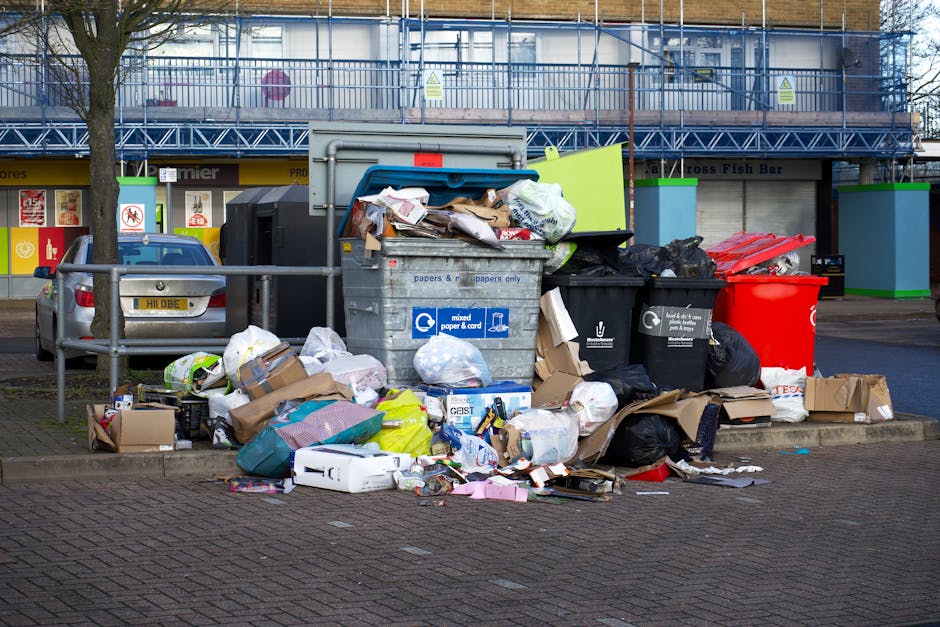
A small example: someone clears a shed the night before and leaves everything in one big mixed mound by the garden fence. It looks tidy enough, but the crew now has to separate, lift, and navigate a narrow side passage in poor light. The job still gets done, of course. It just takes longer. Much longer.
Tools, Resources and Recommendations
You do not need fancy equipment to avoid delays, but a few simple tools help a great deal.
- Sticky labels or masking tape: useful for marking items to keep or remove.
- Phone camera: useful for photographs of access points and bulky items.
- Measuring tape: helpful if you are unsure whether large furniture will fit through a route without being dismantled.
- Bin bags and sturdy boxes: these keep loose waste contained and easier to move.
- Gloves and basic protective gear: sensible for sorting sharp or dusty items before collection.
- Notebook or phone note: ideal for listing items, access instructions, and anything unusual the crew should know.
If you are comparing wider services, it can help to look at the type of job rather than only the item list. A home clearance job, for example, may be a better fit than a more general collection if the property needs to be emptied room by room. Likewise, commercial waste is usually better handled through business waste removal when office or trade waste needs regular attention.
And if you are planning something more sensitive or high-traffic, it is worth reviewing the provider's own policies too. Pages like health and safety policy, insurance and safety, and payment and security can give you a better feel for how professionally a collection is run. That reassurance matters, especially when you are dealing with a property full of things you just want gone.
Law, Compliance, Standards, or Best Practice
Rubbish collection is not just about speed. In the UK, waste needs to be handled responsibly, and good operators will follow sensible best practice around sorting, transport, safety, and disposal. You do not need to know every detail yourself, but it helps to understand the basics.
For households, the main practical point is to avoid placing prohibited or hazardous materials into a general load unless the provider has confirmed they can take them. For businesses, the expectations are usually stricter because commercial waste often involves record-keeping, duty of care, and clearer separation of materials. That is why a service such as business waste removal can be especially useful when you need a more structured process.
Best practice also includes safe lifting, proper vehicle loading, responsible disposal routes, and accurate communication about what is being collected. These are not glamorous topics, but they matter because they reduce delays and reduce risk. If something is heavy, sharp, dusty, damp, or potentially hazardous, say so early. It is much better to be slightly over-cautious than to force a last-minute rethink on collection day.
One more practical point: if you are arranging a large clearance, especially after a move, refurbishment, or office reset, it is sensible to review the provider's terms and conditions before booking. That way, you know what is included, what may cost extra, and what happens if access is not as expected. Plain, boring, useful reading. The best kind, really.
Options, Methods, or Comparison Table
Not every collection needs the same approach. Here is a simple comparison to help you choose the least-delay route for your situation.
| Method | Best for | Delay risk | How to reduce delays |
|---|---|---|---|
| General rubbish collection | Bagged waste, mixed household clutter | Medium | Sort items and keep access clear |
| Specialist house or home clearance | Full rooms, bulky contents, inherited items | Low to medium | Provide a room-by-room overview and photos |
| Furniture-focused clearance | Sofas, wardrobes, tables, beds | Medium | Measure doorways and note any dismantling needed |
| Garden or garage clearance | Outdoor clutter, tools, soil, green waste | Medium | Clear paths and group similar materials together |
| Builders' waste clearance | Renovation debris, rubble, timber, packaging | Medium to high | Separate heavy waste and confirm site access |
| Office clearance | Desks, chairs, files, equipment | Low to medium | Nominate one contact and define what stays |
There is no single "best" option for everyone. The right choice depends on what you are clearing, how fast it needs to happen, and how complicated the access is. A straightforward bag collection is one thing. A cramped top-floor flat with a dismantled wardrobe and no parking? That's another story altogether.
Case Study or Real-World Example
A Bracknell homeowner recently needed a garage cleared before a weekend property viewing. The garage looked manageable at first glance, but once they started sorting, they found boxes of mixed paperwork, paint tins, broken shelves, old garden tools, and a heavy cabinet blocking the back wall. Classic.
Instead of leaving everything in one pile, they split items into three groups: remove, recycle where appropriate, and keep. They also cleared the driveway the night before, moved the car off-site, and left a photo note showing the garage contents. Collection day ran smoothly because the team did not need to stop and ask basic questions.
The important part was not luck. It was preparation. By taking twenty minutes the day before, the homeowner avoided a failed visit and kept the rest of the weekend on track. That is the kind of simple win people underestimate.
In another example, an office clearance went more quickly because one person had already marked which desks, monitors, and filing cabinets were leaving the building. No debate, no confusion, no "actually, maybe keep that chair". It sounds obvious, but clear decisions save time faster than almost anything else.
Practical Checklist
Use this checklist before collection day. If you can tick most of it off, your chances of delay drop sharply.
- Waste type confirmed
- Approximate volume estimated honestly
- Heavy or awkward items identified
- Access route cleared
- Parking or loading space checked
- Items separated into keep/remove piles
- Hazardous or restricted items flagged in advance
- Photos taken of bulky or unusual items
- One main contact available on the day
- Payment and booking details ready
- Any stairs, narrow doors, or lift limits noted
- Garden, garage, loft, or side access inspected
- Weather or timing issues considered
If you are dealing with a more complex property, it can be worth aligning your clearance type with the job itself. For example, garage clearance is a better fit for mixed storage clutter, while loft clearance is more sensible for awkward upstairs storage. Matching the service to the site can remove friction before it starts.
Conclusion
Delays in rubbish collection are usually not random. They are usually the result of unclear information, poor access, mixed waste, or late preparation. The upside is that all of those problems can be managed with a bit of care. That is the real value of these insider tips to avoid delays in Bracknell rubbish collection: they give you control over the parts that most often go wrong.
Start early, be honest about the amount of waste, keep access clear, and tell the collector anything unusual before the day arrives. Do those things well and the process tends to feel far simpler, far calmer, and far quicker. Which, let's face it, is what everyone wants when there is a pile of rubbish staring back at them.
If you are planning a larger or more specific clearance, taking a moment to look at the relevant service page, policies, and pricing information can help you book with confidence and avoid surprises.
Get a free quote today and see how much you can save.
And once it is all out of the way, you get that lovely empty-space feeling again. Quiet, clean, done. It's a good feeling.
Frequently Asked Questions
What causes the most delays in Bracknell rubbish collection?
The biggest causes are usually blocked access, inaccurate descriptions of the waste, mixed materials, and items that were not ready when the crew arrived. A lot of delays are preventable with better preparation.
How early should I prepare for rubbish collection?
Ideally, start the day before. That gives you time to clear access, separate items, and check for anything you forgot in a loft, shed, or side passage. Last-minute prep tends to miss the awkward bits.
Do I need to sort everything before the collection?
You do not always need a perfect sort, but separating obvious categories helps a lot. Furniture, general rubbish, garden waste, and builders' waste are easier to handle when they are not all mixed together.
Can blocked parking delay a rubbish collection?
Yes, very much so. If the vehicle cannot get close enough, the crew may need more time to carry items or may have to rearrange the job. Clear parking or loading space is one of the easiest wins.
What should I do with bulky furniture before collection day?
Move it close to the exit route if you can, and note whether it needs dismantling. If you are clearing lots of large items, a dedicated furniture service can make things smoother than a generic approach.
Are lofts, garages, and flats more likely to cause delays?
They can be, mainly because access is trickier. Narrow stairs, low ceilings, poor lighting, or cramped parking all slow things down if they are not mentioned in advance.
Should I tell the collector about broken glass or paint tins?
Yes. Anything sharp, hazardous, or unusual should be flagged early. It helps the team plan safely and avoids awkward surprises on the day.
Is it faster to book a specialist clearance instead of general rubbish removal?
Often, yes. If your job is clearly a house clearance, office clearance, or garden clearance, a specialist service may be more efficient because the team knows what to expect.
What if I am not sure how much rubbish I have?
Give your best estimate and mention that it is approximate. Photos help a lot. A rough, honest description is usually better than a guess that sounds neat but turns out wrong.
Do business collections need more planning than household ones?
Usually they do. There may be multiple people involved, access restrictions, security considerations, or equipment that must stay. A single point of contact makes a big difference.
How can I reduce the chance of a failed collection?
Confirm the waste type, clear the route, be available for questions, and make sure everything you want removed is actually accessible. That combination prevents most failed visits.
Where should I start if I want a smoother rubbish collection in Bracknell?
Begin by checking the type of service you really need, then review the relevant preparation details and booking information. A little planning up front saves far more time than it costs.